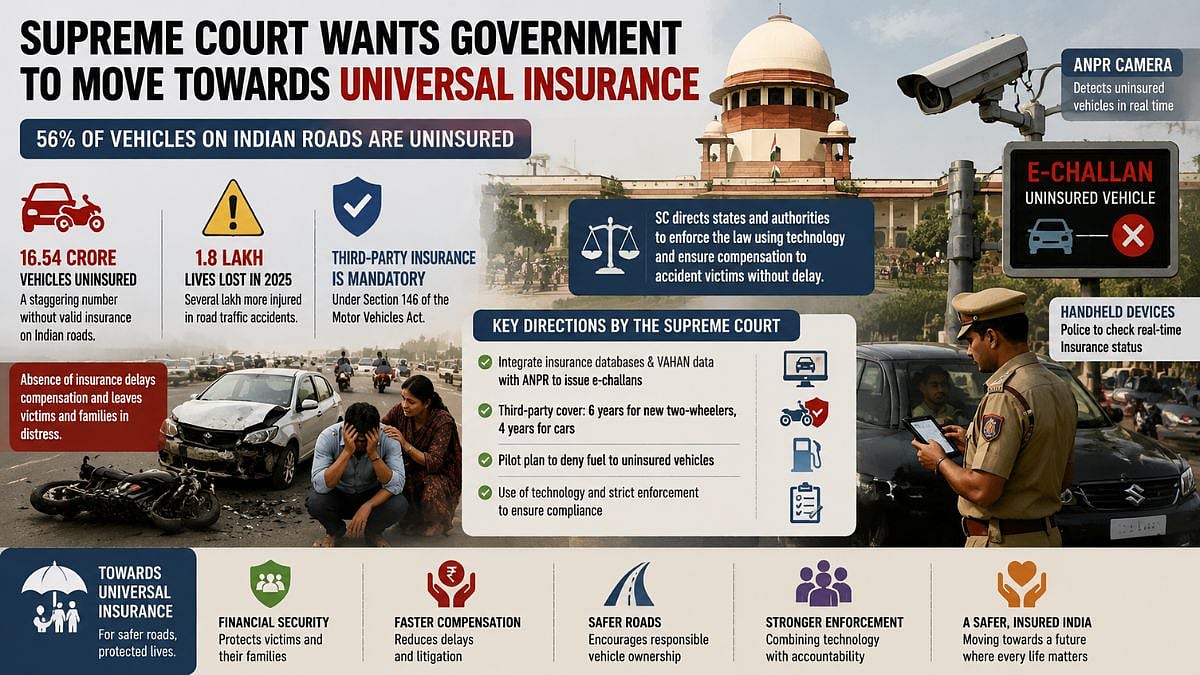
'No fuel for uninsured vehicles', proposes Supreme Court; asks Centre for plan
The top court also ordered a technology-driven enforcement mechanism to automatically identify and penalise such vehicles without an insurance.
National · 13 updates
The top court also ordered a technology-driven enforcement mechanism to automatically identify and penalise such vehicles without an insurance.
The Supreme Court has initiated a pilot project that connects fuel supply to the vehicle's insurance status, aiming to enhance adherence to mandatory third-party insurance laws. Additionally, the court has extended the insurance requirement period for new vehicles, intending to ensure that accident victims receive prompt compensation. Monitoring compliance will be supported by automatic number plate recognition cameras.
The court observed that approximately 56 per cent of vehicles lack insurance coverage.
SC extends cover of new cars to four years, and two-wheelers to six “in the interest of road safety”; it says with vehicles remaining uninsured, accident victims and their families “have no recourse to adequate compensation”
No insurance, no fuel? Supreme Court proposes pilot project at petrol pumps
Court Also Suggests Such Vehicles Be Denied Fuel
In response to a high rate of uninsured vehicles, the Supreme Court on Tuesday proposed a pilot project to deny fuel access to uninsured vehicles.
Mumbai: General insurers may have to increase reserves for motor third-party claims as a series of Supreme Court rulings raise the compensation payable to accident victims, putting further pressure on insurers' profitability.The Supreme Court's June ruling in the Shishu Pal case, which fixed a notional monthly income of ₹30,000 for homemakers while calculating compensation in motor accident claims, has implications for insurers. They estimate the ruling could increase motor third-party claim outgo by 3-4% initially, with the impact potentially rising to 10-12% as courts across the country adop